Economy Face-Off: Pakistan vs India
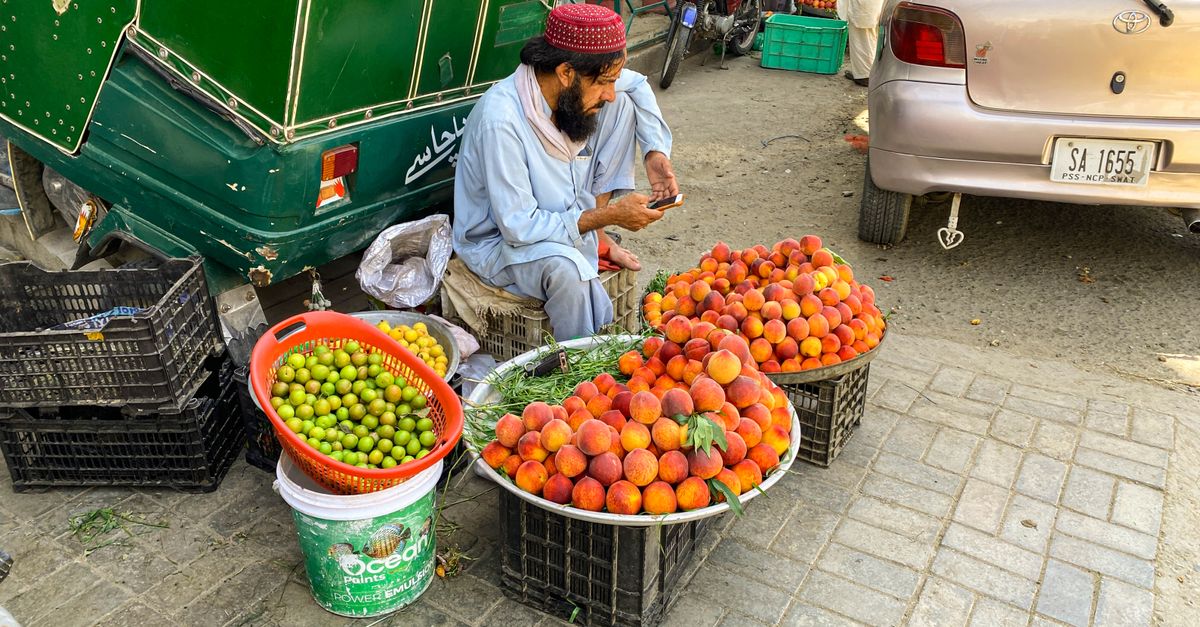
India’s economy is larger, faster-growing, and more diversified. Pakistan’s faces deeper structural challenges — lower investment, weaker exports, and recurring balance-of-payments stress. So when people ask who is best Pakistan vs India economy, the short answer isn’t about pride or politics — it’s about measurable fundamentals: size, stability, resilience, and inclusion. That said, raw numbers don’t tell the full story. Growth without jobs, GDP without equity, or expansion without sustainability leaves millions behind. This isn’t a scoreboard — it’s a closer look at how each economy actually works for its people.
Size & Scale: Not Even Close
India’s nominal GDP stood at $3.7 trillion in 2023 — over eight times Pakistan’s $436 billion. Adjusted for purchasing power (PPP), the gap narrows but stays massive: $13.2 trillion vs $1.5 trillion. Population plays a role — India has 1.4 billion people, Pakistan 240 million — but scale isn’t just about headcount. India hosts over 100 Fortune 500 companies; Pakistan has none. Its stock market capitalization is nearly 10x larger. More importantly, India’s service sector — especially IT, finance, and business process outsourcing — contributes over 54% of GDP and exports high-value services globally. Pakistan’s services are largely domestic and informal. So while who is best Pakistan vs India economy sounds like a toss-up to some, the sheer weight of output, integration, and global relevance tilts decisively toward India — and has for over two decades.
Growth & Stability: Volatility vs Momentum
India averaged 6.2% real GDP growth over the last decade — even through pandemic shocks. Pakistan’s average? Just 2.9%, with wild swings: -0.9% in 2020, 6.0% in 2021 (a rebound bounce), then back to 0.3% in 2023. Why? India benefits from deeper domestic demand, stronger policy buffers, and a central bank with more credibility. Pakistan relies heavily on external financing — IMF bailouts since 2019, sovereign debt trading at distressed levels, and frequent currency devaluations that spike inflation. In 2024, inflation hit 38% in Pakistan — the highest in Asia — while India held it near 5%. That kind of instability erodes savings, deters long-term investment, and makes planning nearly impossible for small businesses. So on who is best Pakistan vs India economy in terms of predictability and room to breathe? India wins on consistency — not just speed.
Trade, Exports & Industrial Base
Pakistan exports around $32 billion annually — mostly textiles, rice, and leather. Over 60% goes to just three markets: US, EU, and UK. India exports $450+ billion — software, pharmaceuticals, engineering goods, and refined petroleum. Its export basket is broader, higher-margin, and less vulnerable to single-market tariffs or quotas. Crucially, India runs a growing surplus in services trade ($130B in 2023); Pakistan runs a steep deficit. Manufacturing as a share of GDP? India: 17%; Pakistan: 12.5% — and falling slowly due to energy shortages and outdated infrastructure. FDI tells a similar story: India attracted $73 billion in 2023; Pakistan got $1.4 billion — barely enough to cover one month of import bills. When evaluating who is best Pakistan vs India economy on outward-facing strength, India’s ability to compete globally — not just survive regionally — stands out.
People, Poverty & Human Development
Economies aren’t just balance sheets — they’re livelihoods. India lifted over 400 million people out of multidimensional poverty between 2005–2023 (UNDP). Pakistan reduced poverty too — but far less steadily, and recent inflation wiped out years of progress. Life expectancy? India: 70.8 years; Pakistan: 66.4. Literacy rates: 77% vs 62%. And while both struggle with youth unemployment, Pakistan’s rate sits near 13% for 15–24-year-olds — double India’s. Social protection is thinner: only 12% of Pakistan’s workforce has formal pension coverage, versus 25% in India — and India’s PM-KISAN cash transfer program reaches over 110 million farmers monthly. So even if who is best Pakistan vs India economy seems like a macro question, the micro reality — whether a nurse in Lahore or a teacher in Jaipur can afford medicine, school fees, or rent — shows why inclusive growth matters more than headline GDP.
Frequently asked questions
Is Pakistan’s economy growing faster than India’s right now?
No — not recently. In FY2024, Pakistan’s growth was estimated at 0.3%, while India clocked 8.2%. Short-term spikes in Pakistan (like the 6% in 2021) reflect base effects after sharp contractions, not sustained momentum.
Does Pakistan have any economic advantages over India?
Yes — lower wage costs, proximity to Central Asia, and untapped hydropower potential. But these haven’t translated into competitive advantage yet due to governance gaps, energy shortages, and weak export promotion.
Why does the 'who is best Pakistan vs India economy' question keep coming up?
It’s often rooted in national identity, historical ties, and regional rivalry — not just economics. People want benchmarks. But comparing them meaningfully means looking beyond size to resilience, equity, and adaptability — not just who’s bigger.
Can Pakistan close the gap with India economically?
It’s possible — but would require consistent reform: fixing circular debt in energy, boosting tax collection (just 10% of Pakistanis pay income tax), stabilizing the rupee, and investing seriously in skills and export diversification. No quick fixes exist.